

What CIFF Guangzhou is — and what we can confirm about 2027
CIFF is the China International Furniture Fair. The Guangzhou edition is the spring show, held annually in March, and it runs in two separate phases rather than one continuous week. For overseas importers, retail buyers and contract specifiers, that structure — more than any single date — decides when you should fly.
Here is the honest status as this guide goes to press: the official CIFF Guangzhou 2027 dates, hall assignments and phase/category split have not yet been confirmed on a primary source. We will not guess them. Everything below is a planning framework you fill in as the organiser publishes facts — because most of the work of a good fair trip happens before the dates land, not after.
For provisional calendar blocking, start from the last recorded edition: our CIFF Guangzhou 2026 fair page carries the verified record we hold — an annual March fair in Guangzhou, with a recorded start of 1 March 2026. Its venue and end-date fields are still being filled, so treat it as a baseline for the window, not a confirmed timetable. That is consistent with how we handle every fair: our trade fair guides are hand-checked on the official fair sites, each entry carries name, edition year, start and end dates, city, country, venue, organiser, official URL and focus, and last-edition exhibitor and visitor figures appear only when a source URL exists in the record. Where the date fields are empty we leave them empty rather than publish an estimate — so if you need exact dates before committing money, take them from the organiser's own announcement or ask the fair directly through its official site.
By the end of this guide you will have four things: a phase decision, a hall-routing method, a travel-admin order of operations, and a countdown checklist you can copy into your calendar today.
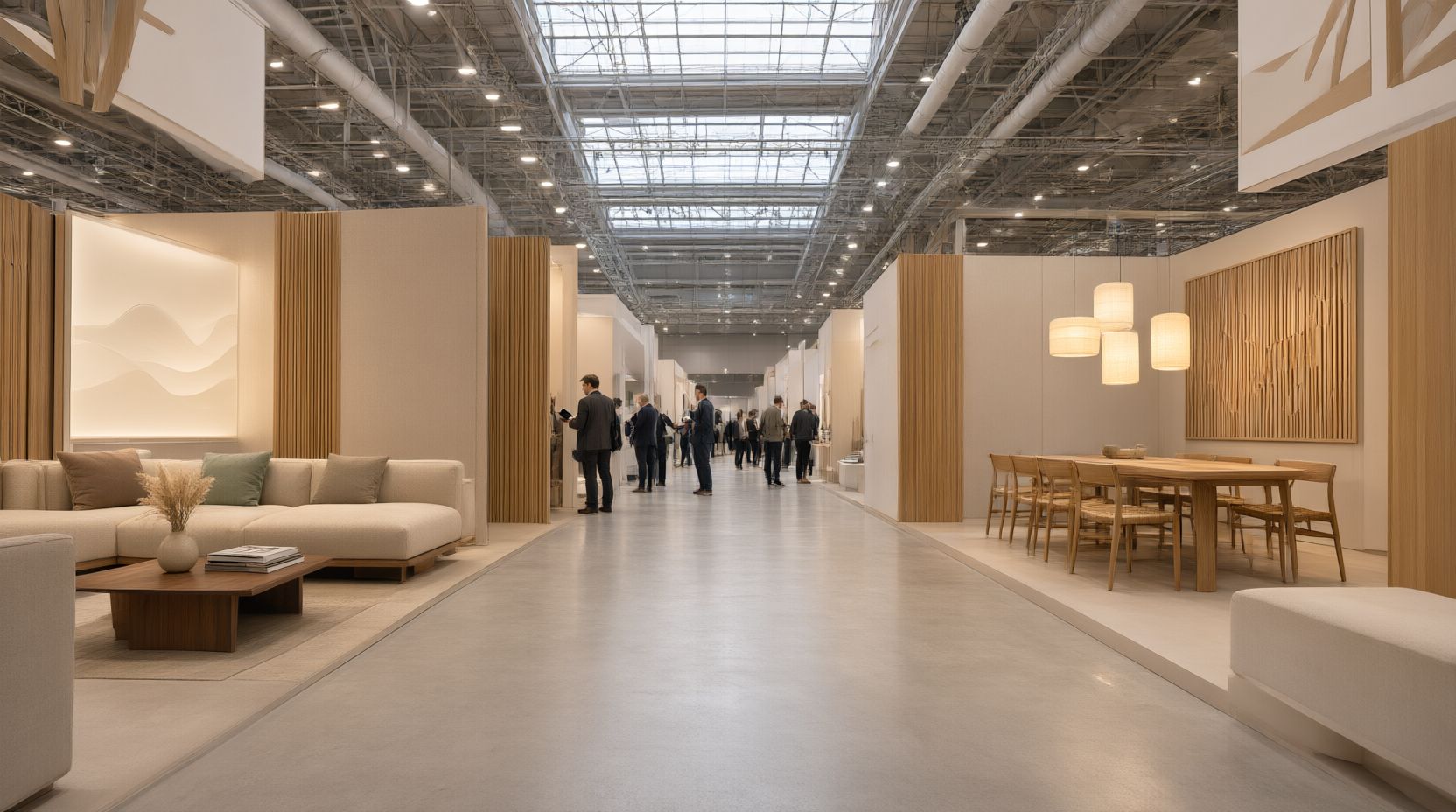
Illustrative photo, not this business.
Dates and the two-phase split: choosing which week you actually need
The split matters more than the dates themselves. CIFF Guangzhou divides product categories between its two phases, so it is worth checking the organiser's category list before you book anything — a buyer who books the wrong week can fly twelve hours and find their category simply isn't on the floor. The 2027 phase dates and the exact category-to-phase mapping are not yet published; when they are, they belong on the organiser's own announcement, not a resale listing.
Until then, use a decision rule rather than a guess:
- Residential buyers — living, dining and bedroom furniture — follow whichever phase the organiser assigns to home furniture.
- Office, hospitality and contract specifiers follow the office and commercial-space phase.
- Décor, lighting and accessories buyers follow the home décor and textiles phase.
- Machinery, materials and upholstery-supply buyers check the industrial phase assignment separately; it does not always sit with finished furniture.
If your buying list spans both phases
You have three options, each with a different cost shape:
- One long stay covering the gap. Highest hotel and per-diem cost, but one flight, one jet-lag cycle, and time between phases you can put to work.
- Two short trips. Two flights and two rounds of admin, but lower total nights away — sensible if only a small part of your list sits in the second phase.
- Two colleagues splitting phases. One flight each, full category coverage, but you need a shared note-taking system so the two halves of the trip merge into one shortlist afterwards.
The gap days between phases are commonly used for factory visits and sample reviews in the Pearl River Delta manufacturing belt around Guangzhou — Foshan and Dongguan are the names buyers raise most often. We hold no verified door-to-door travel times for those routes, so build generous buffers and confirm journey times with each factory when you fix the appointment.
Booking discipline
Hold refundable flights and hotel reservations against the provisional March window now, and convert them only when the organiser confirms the dates. It is widely reported among regular attendees that hotel inventory near the venue tightens early in the run-up to show week — a refundable hold placed months ahead costs you nothing but protects your options.
Halls and venues: how to read the floor plan before you walk it
The 2027 venue split — which categories sit in the Canton Fair Complex at Pazhou, which in the Poly World Trade Center Expo, and whether any additional venue is added — has not been announced, and neither has the hall/zone numbering or the floor plan release date. Plan for the possibility of more than one venue, and check the official plan the moment it appears.
One warning from experience with large fairs generally: hall and zone assignments move between editions. A route that worked in 2026 is a starting hypothesis, not a plan. Rebuild it against the new map every year.
The routing method
- 1
Export your target exhibitors — from the official directory once it goes live, plus the suppliers you have already screened (more on that below).
- 2
Sort by hall, then booth number — never alphabetically by supplier name. Your feet, not your spreadsheet, set the order.
- 3
Cluster into geographic blocks — group booths that sit in the same or adjacent halls into half-day blocks.
- 4
Cap each day at a small number of adjacent halls plus buffer time. Walking a mega-fair is physical work; an overpacked day produces shallow notes.
- 5
Schedule second passes as separate days — the supplier you want to revisit deserves a fresh conversation, not a sprint past the booth at closing time.
Capture habits that make the trip usable later
A fair generates hundreds of photos and business cards; most buyers lose the thread within a week. Four habits prevent that:
- Photograph the booth sign and the product together, so every image is self-identifying.
- Record the product code in the same note as the photo.
- Scan or save the contact on WeChat on the spot — it is the channel most Chinese factories actually answer.
- Write the quote's incoterm and MOQ on the same note. A price without terms is not a quote.
Kit list: broken-in shoes, a power bank, an offline screenshot of the hall map, a translation app, printed spec sheets, and a notebook per category so notes don't blur across suppliers.
Visas, badges and getting to Pazhou: the admin order of operations
Sequence the admin so nothing blocks anything else:
Passport validity → visa or visa-free eligibility → invitation letter if required → flights and hotel → buyer registration → meeting bookings.
Entry routes: check which one you qualify for
China currently offers two distinct visa-free routes, and they are easy to confuse:
- 240-hour visa-free transit. According to the National Immigration Administration of China, nationals of 57 countries — including the UK, US, Canada, Singapore, the UAE and Indonesia — may enter visa-free through 65 designated ports in 24 provinces and stay no more than 10 days in the permitted areas. You must hold an ordinary passport and an onward ticket with a confirmed seat and departure date to a third country or region. This is a transit policy: a straight return trip home does not qualify.
- Unilateral visa-free entry. Under a separate policy described by the Beijing Municipal People's Government, nationals of listed countries holding valid ordinary passports may enter for business, tourism, family visits, exchange or transit and stay no more than 30 days without a visa. For a fair trip plus factory visits, this is often the simpler route — if your nationality is on the list.
Both policies change; verify your own eligibility with the official Chinese embassy, consulate or immigration source before booking. If neither route covers you, you will need a business visa — and possibly an invitation letter. Whether the organiser issues invitation letters for CIFF Guangzhou 2027, and with what lead time, has not been announced; ask via the official fair site as soon as registration opens, because letter requests are typically the slowest step in the chain.
Buyer pre-registration details for 2027 — opening date, whether online registration is free versus on-site badge fees, and the documents overseas buyers must present — are likewise unconfirmed. As general practice, carry your passport, business cards and some proof of your company; check the official requirements when they publish.
Getting there
Most overseas buyers arrive via Guangzhou Baiyun International Airport. From the airport, the Guangzhou Municipal People's Government describes the metro route: Line 3 connects to Line 8 at Kecun Station, and Line 8 serves both Pazhou and Xingangdong stations, each within walking distance of the Canton Fair Complex; Line 11 also serves Pazhou Station. Line 8's Pazhou Station serves Areas B and C of the complex. Allow comfortable time for the transfer with luggage — we hold no verified journey-time figure, so check a live route planner nearer the date.
Where to stay
Decide by where your meetings actually are:
| Base | Best when | Trade-off |
|---|---|---|
| Near-venue hotels | Most meetings are on the fair floor; you want walking access and early starts | Quieter evenings, fewer dining and meeting options |
| City-centre hotels | Evenings involve dinners, agents or city-side meetings | A metro commute each morning of show week |
If your gap days are full of factory visits, a base with easy road access out of the city may matter more than proximity to Pazhou. Confirm which metro station serves each 2027 venue once the organiser announces the venue split.
Before you land, set up the ground layer: a mobile payment app linked to a working card, an eSIM or local SIM, tested access to your work email and cloud files, and a plug adapter.
Build your supplier shortlist and meeting schedule before you fly
Work backwards from the show. At roughly six to eight weeks out, pull the exhibitor directory and filter by your category and target price band. The 2027 directory go-live date has not been announced, so set a reminder to check the official site rather than waiting for an email.
Start the shortlist before the directory exists. Furnishpedia's manufacturer directory covers factories in China — Foshan, Dongguan, Shenzhen and Zhejiang — plus Vietnam (Binh Duong, Dong Nai), Malaysia (Muar, Johor) and Indonesia (Jepara), and browsing and sourcing is always free for buyers. Arrive with names you have already screened, then add the exhibitors you find in the official directory and cross-check which of your existing candidates are exhibiting. Listings come from public business data and are not endorsements — screen them yourself, which is exactly what the fair floor is for.
Meeting outreach, two to three weeks ahead
Message by email and WeChat with your product spec, target volume, price band and certification needs. Ask each supplier to confirm hall, booth, date and a fixed slot. Keep slots to 30–45 minutes and leave travel gaps between halls — a schedule with no slack collapses by lunchtime on day one.
A repeatable day template:
- Morning: pre-booked meetings in one hall.
- Afternoon: unstructured discovery walk in the same or an adjacent hall.
- Before dinner: 30 minutes of write-up while details are fresh. This half-hour is the highest-leverage habit of the whole trip.
The one-page spec sheet to carry per product
Target dimensions and materials · finish options · MOQ · packaging and carton dimensions · CBM per unit · units per container · lead time · FOB port · incoterm · required certifications for your market.
Ask every shortlisted supplier for carton dimensions and loading quantity. That is the input you need to compare offers properly after the show — headline FOB prices mislead when carton sizes differ. With those numbers you can run our free Landed Cost Calculator, which takes FOB price, freight per container or per CBM, insurance, your own duty and VAT rates, broker fees and inland delivery, and returns total and per-unit landed cost. It is an educational estimate, not a quote — but it compares offers on the number that actually reaches your warehouse.
Whether the organiser will run buyer services worth booking in 2027 — translator desks, buyer lounges, matchmaking programmes, inter-venue shuttles — is not yet announced; check the official buyer-services page when registration opens.
Your countdown checklist — and what to do in the week after the show
Copy this into your calendar and shift the anchors once the organiser confirms the dates:
- 1
T-6 months — passport validity check; confirm your visa or visa-free route against official sources.
- 2
T-4 months — refundable flight and hotel holds against the provisional March window.
- 3
T-3 months — buyer registration when it opens; invitation letter request if your visa route needs one.
- 4
T-6 weeks — exhibitor shortlist built from the official directory plus your pre-screened manufacturers.
- 5
T-2 weeks — meeting confirmations with hall, booth and fixed slots; cluster them geographically.
- 6
T-1 week — final floor plan downloaded, offline maps saved, spec sheets printed, kit packed.
- 7
Show week — daily 30-minute write-ups before dinner.
- 8
T+1 week — structured follow-up and quotation comparison.
The first 48 hours after the show
Send a specific follow-up to each shortlisted supplier referencing the booth, product code and quoted terms — suppliers meet hundreds of buyers, and specificity is how they find your file. Request written quotations stating incoterm, MOQ, lead time and payment terms.
Then compare on landed cost and container efficiency, not headline FOB price, and order samples from your top two or three before committing to a container. In our view this is where most first-trip buying mistakes are avoided: the cheapest quote on the floor is rarely the cheapest pallet in your warehouse.
If the dates clash with your buying calendar
The autumn Shanghai edition of Furniture China is the alternative China furniture sourcing trip — see our Furniture China Shanghai 2026 page for planning. Its record shows a September 2026 Shanghai fair; exact dates and venue are still being confirmed there too.
Key points
- CIFF Guangzhou is the spring, two-phase edition of the China International Furniture Fair; 2027 dates and hall maps are not yet confirmed.
- Choose your phase by category before you choose your flights — the wrong week means your products aren't on the floor.
- Route halls geographically, cap each day, and capture booth sign + product code + terms in one note.
- Check both visa-free routes (240-hour transit and unilateral entry) against official sources; sequence admin so nothing blocks anything else.
- Compare offers after the show on landed cost and container efficiency, using carton data collected at the booth.
This guide will be updated with confirmed dates, venues and hall maps once the organiser publishes them — bookmark it and check back before you book.
Sources
- National Immigration Administration of China — 240-hour visa-free transit policy (2026)
- Beijing Municipal People's Government — unilateral visa-free entry FAQ (2025)
- Guangzhou Municipal People's Government — metro routes to the Canton Fair Complex, Pazhou (2026)